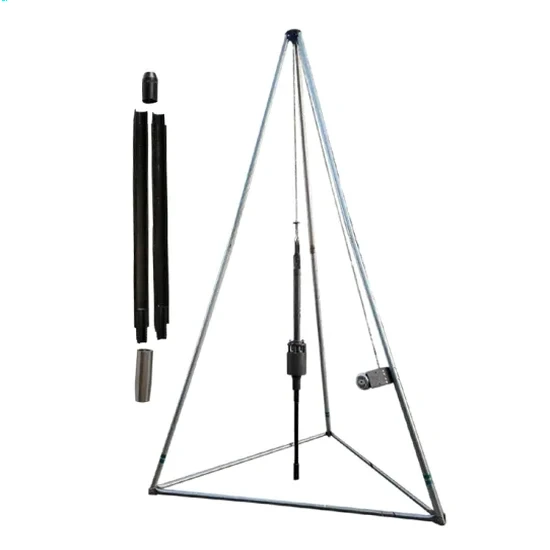
Dallas geotechnical work often uncovers surprises. The Eagle Ford Shale and stiff Taylor Marl sit just beneath the surface, but their weathered zones can be notoriously inconsistent. A standard penetration test run by someone who doesn't read the cuttings carefully will miss thin sand seams or perched water that complicate excavation. We perform the SPT per ASTM D1586 with automatic trip hammers, and our crew logs every 6-inch increment instead of just the blow count. That attention catches the soft lenses that cause differential settlement in slab-on-grade foundations across the Metroplex. For deeper profiles where we need continuous tip resistance, we pair the SPT with CPT soundings to fill in the gaps between split-spoon samples.
An SPT blow count isn't just a number. In Dallas clay, it's the difference between a standard footing and a costly over-excavation.
Method and coverage
Site-specific factors
Dallas grew fast, and a lot of fill was placed without compaction records during the post-war boom. We hit old debris, ash, and uncontrolled clay fill in neighborhoods from Oak Cliff to Lake Highlands. If the SPT hammer drops and the sampler sinks 18 inches under its own weight, that's a zero blow count and a red flag. Basing a foundation on that without ground improvement is a recipe for cracked slabs and lawsuits. The IBC requires an investigation for any commercial structure, and skipping the SPT on a residential addition over hidden fill can cost more than the test itself when the sheetrock starts to crack. The risk isn't theoretical; it shows up in structural distress reports filed with the city every year.
Relevant standards
ASTM D1586-18, ASTM D2487-17e1, IBC 2021 (Section 1803), ASCE 7-22
Related services
Residential Foundation SPT
Two to four boreholes on a standard residential lot, typically 20 to 30 feet deep. We sample every 2.5 feet, log the expansive clay profile, and provide N-values directly to your structural engineer for pier-and-beam or post-tensioned slab design.
Commercial & Mid-Rise SPT Investigation
Drilling program laid out per IBC 1803. We sample at the footing bearing level and down to 1.5 times the building width, capturing N60 values for bearing capacity and settlement estimates. Includes classification per ASTM D2487 in our in-house lab.
Floodplain & Infrastructure SPT
Deeper borings (60 to 100 feet) along the Trinity River corridor and tributary creeks. Focus on liquefaction screening, scour evaluation, and soil stiffness for bridge abutments and culvert replacements. Hammer energy calibration documented for every rig.
Typical parameters
Quick answers
How much does an SPT boring cost for a home foundation in Dallas?
For a standard residential lot in Dallas, a single SPT boring to 20 or 25 feet runs in the US$570 to US$830 range. That includes the drilling, sampling, logging, and a signed report with N-values and soil classification. A typical foundation investigation uses two or three borings, so the total depends on depth and access. If we need to mobilize on a tight lot in Lakewood or the M Streets with limited overhead clearance, we bring a compact rig that adds a small surcharge.
What's the difference between uncorrected N and N60?
The uncorrected N is the raw blow count from the field. N60 corrects that number to account for hammer energy efficiency, which matters because an automatic trip hammer can deliver anywhere from 60 to 90 percent of the theoretical energy. We measure energy ratio on our rigs and report N60 so your geotechnical engineer isn't applying an arbitrary correction factor. In the Dallas area, where we're often designing in stiff clay, the N60 directly feeds into bearing capacity correlations by Terzaghi and Peck.
How deep do you drill for a standard SPT in the Dallas area?
For a slab-on-grade house, we typically go to 20 or 25 feet. That gets us through the weathered zone of the Eagle Ford or Taylor Marl and into competent material. For a commercial building with a deeper stress bulb, we extend borings to at least 1.5 times the footing width, which can mean 40 to 60 feet. In the Trinity floodplain, liquefaction studies often require 80 to 100 feet to capture all potentially liquefiable layers.
Can SPT data tell if my soil is expansive?
SPT blow counts alone don't directly measure expansion potential, but they flag the clay layers we need to test. When the sampler recovers sticky, high-plasticity clay with N-values under 10, we send that sample to the lab for Atterberg limits and percent passing the #200 sieve. That combination gives us the plasticity index and fines content, which are the key inputs for the PTI method used on post-tensioned slabs across North Texas.