Slope engineering in Dallas encompasses the full spectrum of analysis, design, and stabilization measures required to manage natural and man-made slopes across the metroplex. With rapid urban expansion pushing development into areas with significant topographic relief, including the White Rock Escarpment and the Trinity River corridors, slope stability has become a critical geotechnical consideration for property owners, developers, and municipal agencies alike. A comprehensive slope stability analysis is typically the first step in any slope-related project, evaluating factors of safety against sliding, rotational failures, and debris flows under both static and seismic conditions. The category covers everything from initial site characterization and geologic hazard assessment to the design of retention systems, drainage solutions, and long-term monitoring programs. In Dallas, where clay-rich soils and seasonal moisture fluctuations create unique challenges, proper slope management is not merely a regulatory requirement—it is essential for protecting infrastructure, ensuring public safety, and preserving property values.
The local geology of Dallas presents specific conditions that directly influence slope behavior and failure mechanisms. The region is underlain predominantly by the Eagle Ford Shale and Austin Chalk formations, both of which weather to produce expansive clay soils with high plasticity indices. These soils are notorious for their shrink-swell potential, which can generate significant lateral pressures on retaining structures and trigger progressive slope movements during wet-dry cycles. The White Rock Escarpment, a prominent geological feature running through central Dallas, creates natural slopes with inclinations often exceeding 20 degrees, where Cretaceous-age sedimentary rocks are exposed at the surface. When these overconsolidated clays and shales are unloaded through excavation or erosion, stress relief can lead to time-dependent deformation and eventual slope failure. Additionally, perched groundwater tables within weathered zones and the presence of relict landslide features in certain areas demand thorough subsurface investigation and careful interpretation by experienced geotechnical professionals.
Regulatory compliance in Dallas is governed by a combination of local ordinances and national standards, with the International Building Code (IBC) serving as the foundational document adopted by the City of Dallas. Chapter 18 of the Dallas City Code addresses excavation, grading, and erosion control, requiring permits for any activity that disturbs more than 5,000 square feet of land or alters existing drainage patterns. For slope-specific work, the code references IBC Section 1807 for retaining walls and Section 1808 for foundations on or adjacent to slopes, mandating minimum safety factors of 1.5 for static conditions and 1.1 for seismic loading. The Dallas Development Code also incorporates provisions from ASCE 7 for load combinations and requires geotechnical reports to be sealed by a licensed professional engineer in the state of Texas. Where slopes exceed 15 feet in height or are steeper than 2:1, additional review by the City Engineer is triggered, and mitigation measures must demonstrate compliance with the Texas Commission on Environmental Quality's stormwater regulations. These layered requirements ensure that slope stabilization projects are designed with adequate redundancy and long-term durability in mind.
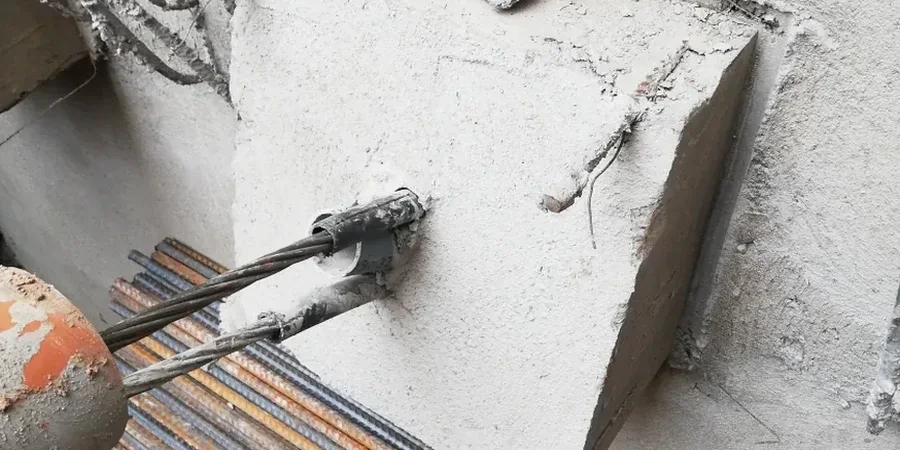
Slope-related services are required across a diverse range of project types in the Dallas area. Residential developments on hillside lots near Lake Highlands or Cedar Hill frequently need retaining wall design to create buildable pads and prevent soil movement toward neighboring properties. Commercial and infrastructure projects, including highway widenings along I-35E and the expansion of DART rail corridors, demand robust slope reinforcement to protect adjacent rights-of-way and maintain operational safety. In these larger-scale applications, active/passive anchor design becomes essential for stabilizing deep excavations and tieback walls where space constraints preclude conventional gravity structures. Landfill expansions, stormwater detention basins, and park developments along the Trinity River also fall within this category, as they involve engineered slopes that must resist both internal erosion and external loading. Even seemingly routine projects like residential pool construction on sloping lots can trigger the need for slope evaluation when cuts exceed 4 feet in depth. Each of these applications requires a tailored approach that accounts for site-specific geology, drainage conditions, and the intended service life of the improvement.
Quick answers
What are the most common causes of slope failure in the Dallas area?
The primary triggers include prolonged rainfall events that saturate expansive clay soils, reducing their shear strength, along with improper drainage that concentrates water flow behind slope crests. Human activities such as unplanned excavation at the toe of a slope, removal of vegetation, and inadequate compaction of fill materials also contribute significantly to instability in Dallas's Eagle Ford Shale and Austin Chalk formations.
When is a geotechnical investigation required for slope development in Dallas?
A geotechnical investigation is mandated by the City of Dallas for any project involving grading exceeding 5,000 square feet, slopes steeper than 2:1, or retaining walls over 4 feet in height. Even when not explicitly required by code, lenders and insurers often demand a sealed report to assess risk before financing construction on or adjacent to slopes.
What is the difference between active and passive anchors in slope stabilization?
Active anchors are post-tensioned during installation to immediately apply a predetermined load to the slope face or retaining structure, actively resisting movement. Passive anchors, by contrast, are not stressed until the ground begins to deform, at which point they develop resistance through grout-to-soil bond and steel elongation, making them suitable for monitoring and gradual load transfer scenarios.
How do Dallas regulations address drainage on stabilized slopes?
Dallas code requires all slope stabilization designs to include comprehensive drainage provisions that intercept surface runoff at the crest and convey it away from the face, typically through lined swales or storm sewers. Subsurface drainage via horizontal drains or chimney drains is often mandated when groundwater is encountered within 3 feet of the design slope surface, in accordance with IBC Section 1805.