In the Dallas-Fort Worth metroplex, comprehensive geotechnical investigation forms the non-negotiable foundation of any successful construction project. This category encompasses the systematic subsurface exploration, sampling, and in-situ testing required to characterize soil, rock, and groundwater conditions before design and construction commence. From towering high-rises in downtown Dallas to expansive residential subdivisions in Collin County, understanding what lies beneath the surface is critical for mitigating risks such as expansive clay heave, differential settlement, and retaining wall failures. A properly scoped investigation not only ensures structural integrity but also optimizes foundation design, potentially reducing construction costs and preventing costly litigation down the line.
The geology of North Texas presents a unique set of engineering challenges that make local expertise indispensable. Much of Dallas is underlain by the Eagle Ford Shale and the Austin Chalk formations, which are often mantled by highly plastic, expansive clay soils. These clays are notorious for their shrink-swell potential, exerting significant pressure on foundations during wet-dry cycles. A robust investigation program must accurately quantify this behavior using techniques tailored to these formations. For instance, a Cone Penetration Test (CPT) provides a near-continuous profile of soil stratigraphy and can be an excellent tool for delineating the interface between stiff clay and weathered shale, while traditional borings with Standard Penetration Test (SPT) sampling allow for direct visual classification and laboratory testing of the cohesive soils that dominate the region.
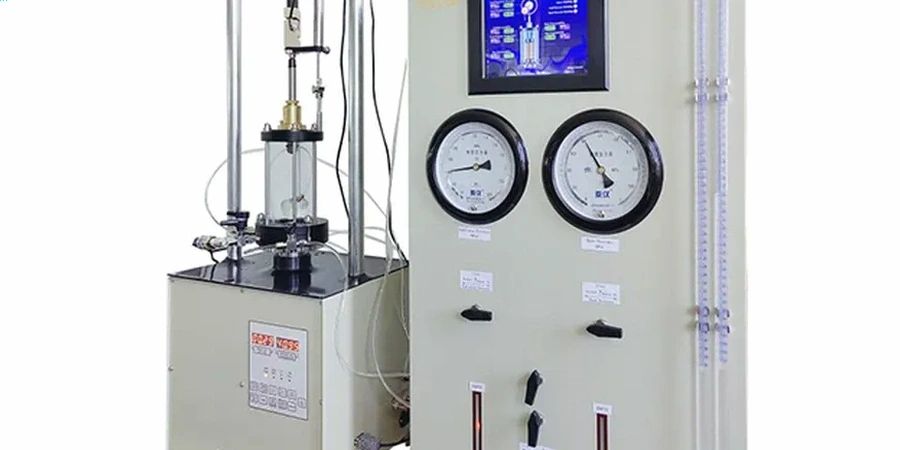
All geotechnical investigations in Dallas must adhere to the standards set forth by the International Building Code (IBC), as adopted and amended by the State of Texas and local municipalities. The Texas Board of Professional Engineers and Land Surveyors (TBPELS) regulates the practice, requiring that all geotechnical reports be sealed by a licensed Professional Engineer. Furthermore, testing procedures must conform to ASTM International standards, such as ASTM D1586 for the SPT and ASTM D5778 for the CPT. Local amendments, particularly regarding allowable bearing pressures and expansive soil mitigation, are critical; for example, many Dallas-area jurisdictions mandate specific post-tensioned slab designs or moisture conditioning protocols based on the findings of the geotechnical report, making strict compliance a core component of the investigation process.
The scope of an investigation is driven by the project type and its associated risk. A preliminary desktop study and limited number of exploratory test pits might suffice for a small, lightly-loaded commercial building, providing a visual assessment of shallow soil conditions and groundwater seepage. In contrast, a deep excavation for a multi-story tower in the Uptown district demands a multi-faceted campaign combining deep borings, pressuremeter tests, and piezometer installations to inform a complex shoring design. Infrastructure projects, such as bridges over the Trinity River, require specialized investigations to assess scour potential and deep foundation capacity. Regardless of scale, the investigation serves to answer fundamental questions about bearing capacity, settlement magnitude, and lateral earth pressures.
Quick answers
When is a geotechnical investigation mandatory for a project in Dallas?
A geotechnical investigation is legally mandated by the IBC for all new buildings and significant additions. In Dallas, you cannot obtain a building permit without a sealed geotechnical report. The report must address soil bearing capacity, expansive soil classification, and provide foundation design recommendations. This applies to everything from single-family homes in Frisco to high-rises downtown, though the scope of the investigation will vary dramatically based on the project's complexity and risk category.
What are the most critical soil conditions an investigation must address in the Dallas area?
The primary geohazard in Dallas is expansive clay soil, which can cause significant foundation heave and cracking during seasonal moisture fluctuations. An investigation must quantify the Plasticity Index (PI) and Potential Vertical Rise (PVR) of these clays. Other critical conditions include the presence of fill materials, depth to groundwater within the Austin Chalk or Eagle Ford formations, and the potential for slope instability along creeks and the Trinity River escarpment.
How deep should a typical geotechnical boring be for a commercial building in Dallas?
There is no single standard depth; it depends entirely on the foundation loads and subsurface conditions. The IBC requires borings to extend below all unsuitable soil and to a depth where the stress increase from the foundation is negligible, typically 10% of the original overburden stress. For a mid-rise structure on expansive clay, borings often range from 30 to 60 feet deep, but must extend deeper if bedrock is shallow or deep foundations like drilled piers are being considered to bypass the active zone of moisture fluctuation.
What is the difference between a CPT and an SPT in a Dallas investigation?
The Standard Penetration Test (SPT) is a traditional drilling method that measures blow counts (N-values) and retrieves a disturbed soil sample for visual classification and laboratory testing. It is essential for evaluating expansive clays. The Cone Penetration Test (CPT) is a faster, electronic test that pushes an instrumented cone into the ground, providing continuous data on soil strength and stratification without sampling. In Dallas, they are often used together: CPTs for stratigraphic profiling and SPT borings for sampling and lab testing.